rp2040
-
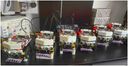 14 Jun 2026 » This weekend at the Coder Dojo Kingston UniversityThis weekend, I once again mentored the robotics activity at the Coder Dojo Kingston University bringing along our fleet of 10 robots for children learning and experimenting with MicroPython.more...
 -
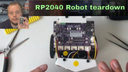 25 May 2026 » Tearing down a Coder Dojo Kingston University robotOur Coder Dojo at Kingston University runs a fleet of 11 Raspberry Pi RP2040 robots — a design that evolved from my Robotics at Home with Raspberry Pi Pico book. After a recent session, one robot came back needing repair: a sheared standoff and some wiring attention. I figured I’d document the design while I had it apart.more...
 -
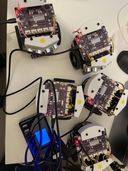 07 Jun 2025 » Preparing for the coder dojoLast night, I got some preparation for today’s Coder Dojo KU Python Robotics activity. These are MicroPython robots based on an RP2040 (the Raspberry Pi Pico chip). The activity is aimed at kids learning to code. I have a fleet of 10 robots, plus 1 more as a demo/test model. It uses some of the principles from my books. These autonomous car type robots are built around the Cytron MakerPi RP2040 control board, with a dual RCWL-1601 sensor for obstacle avoidance, a Maker Line 5-sensor array, and a mini-3 round chassis. The code is written in MicroPython, and the kids write their own code to control them, with us providing activity sheets, reference cards, and helping out if they run into problems.more...
 -
 Line following robots are a great example of autonomous robot behaviour. In this article, I will show you step-by-step how to add a line sensor to a Raspberry Pi Pico robot, how to wire it in, and then how to write Python code for responsive line following on the robot. I include CircuitPython and MicroPython examples.more...
 -
01 Aug 2023 » Making a robotic foam dart turret with sound effects
-
04 Jul 2023 » Me and MeArm in The MagPi
-
08 Apr 2022 » Raspberry Pi Pico Wifi and Wireless
-
08 Feb 2022 » Raspberry Pi Pico USB tip

